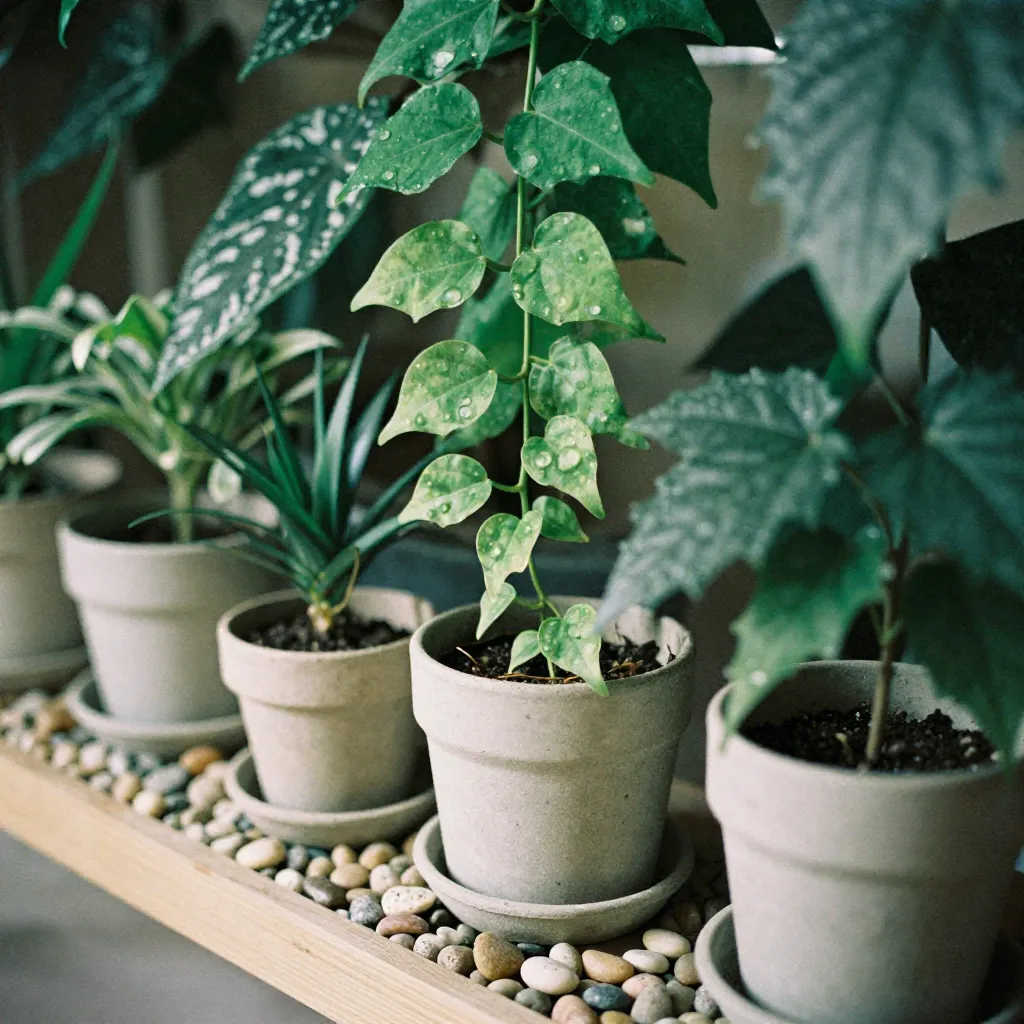
Low-Maintenance Dutch Native Plant Care
Sustainable Practices for Indoor Gardening
Essential Care Guidelines
Learn the fundamentals of caring for native Dutch plants indoors. Our comprehensive guide covers watering, fertilization, composting, and sustainable pot materials.
Watering Cycles
Understanding the natural water requirements of Dutch native plants is essential for successful indoor cultivation. Each species has adapted to specific moisture levels in its native habitat.
High Humidity Plants
Forest understory and marsh species require consistent moisture. Water when the top inch of soil feels slightly dry. Maintain humidity levels between 60-80% using pebble trays or humidifiers.
Moderate Humidity Plants
Heathland and dune species prefer moderate watering. Allow soil to dry slightly between waterings. Maintain humidity around 40-60% for optimal growth.
Low Humidity Plants
Dry grassland species need infrequent watering. Let soil dry completely between waterings. These plants thrive in 30-50% humidity environments.
Natural Fertilization
Native Dutch plants benefit from organic, slow-release fertilizers that mimic natural soil conditions. Avoid synthetic chemicals that can harm beneficial soil organisms.
- Compost Tea: Rich in beneficial microorganisms, apply monthly during growing season
- Worm Castings: Natural source of nutrients, mix into topsoil every 2-3 months
- Seaweed Extract: Provides trace minerals, apply as foliar spray bi-weekly
- Bone Meal: Slow-release phosphorus source, add to soil mix during repotting
Indoor Composting
Create nutrient-rich soil amendments using kitchen scraps and plant waste. Indoor composting systems are compact, odor-free, and perfect for apartment gardening.
Vermicomposting
Use red wiggler worms to break down organic matter. Produces rich castings and liquid fertilizer. Ideal for small spaces.
Bokashi Method
Fermentation-based composting using beneficial microorganisms. Fast, odorless, and produces nutrient-dense compost in 2-4 weeks.
Pest-Safe Methods
Maintain healthy plants using natural pest control methods that don't harm beneficial insects or indoor air quality.
- Neem Oil: Natural insecticide, apply as diluted spray weekly
- Diatomaceous Earth: Physical barrier against crawling insects, sprinkle on soil surface
- Beneficial Insects: Introduce ladybugs or predatory mites for aphid control
- Companion Planting: Grow aromatic herbs nearby to deter pests naturally
Sustainable Pot Materials
Choose eco-friendly containers that support plant health while minimizing environmental impact. Consider these sustainable options:
Clay Pots
Natural terracotta provides excellent breathability and moisture regulation. Reusable and biodegradable at end of life.
Hemp Fiber Pots
Biodegradable containers made from renewable hemp. Can be planted directly in soil, reducing transplant shock.
Recycled Terracotta
Repurposed clay pots reduce waste while maintaining traditional benefits. Look for second-hand or reclaimed options.
Seasonal Dutch Indoor Gardening Calendar
Spring (March-May)
- Begin regular watering schedule
- Start monthly fertilization
- Repot if needed
- Increase humidity for marsh species
Summer (June-August)
- Monitor water needs daily
- Provide shade for sensitive species
- Harvest compost for fertilization
- Check for pest activity
Autumn (September-November)
- Reduce watering frequency
- Prepare for dormancy period
- Collect fallen leaves for compost
- Begin indoor habitat preparation
Winter (December-February)
- Minimal watering required
- Maintain humidity levels
- Plan spring repotting
- Review and adjust care routines